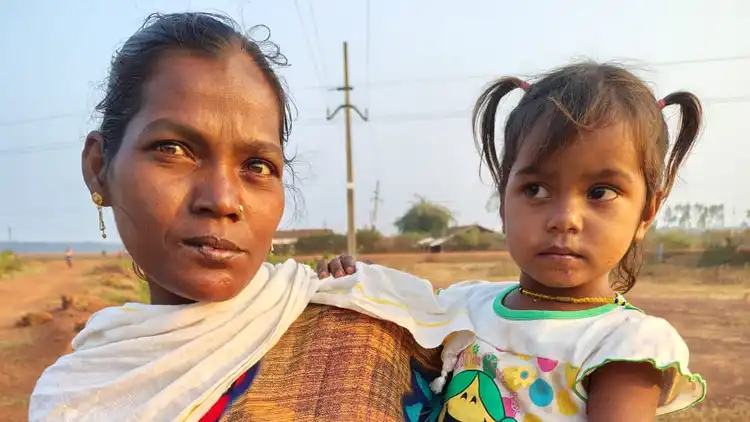
Know More about Mirgan People
Life Style
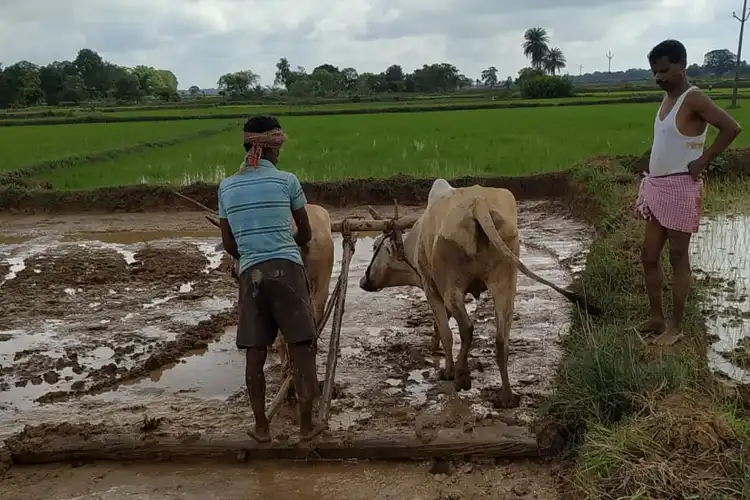
While some Mirgan families continue to practice their ancestral craft, many forced to seek alternative employment. Now agriculture plays a significant role in their livelihood, cultivating crops such as rice, corn, millet, pulses and vegetables. While some go to the cities for labor jobs.
House
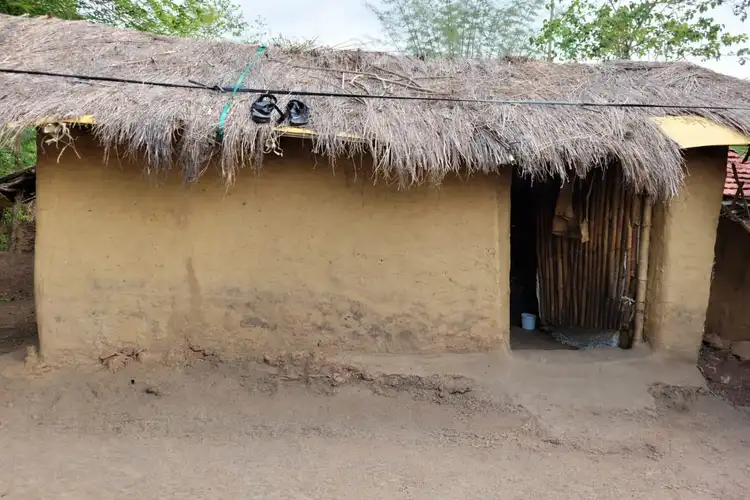
Mirgan villages are small and friendly. Families live close together and support each other. Their houses are simple, constructed with mud, brick, and thatch. People often work together and enjoy social gatherings. Because of financial struggles, some Mirgan families have moved to cities, but many still live in their villages, keeping both their traditions and adapting to new changes.
Their Beliefs
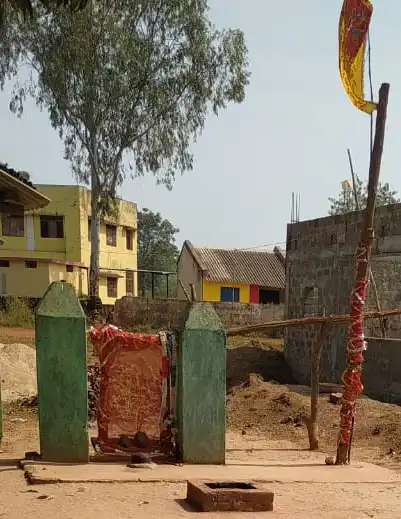
Most Mirgan people practice Hinduism. They celebrate Hindu festivals and worship deities such as Eswara, Vishnu, Shiva and Jagannath. However, they also have unique family gods. They make a room for these gods by the side of their residence. These traditions have been passed down by their forefathers. Temples play a central role in their spiritual life.
Alternative Income
Tamarind Processing
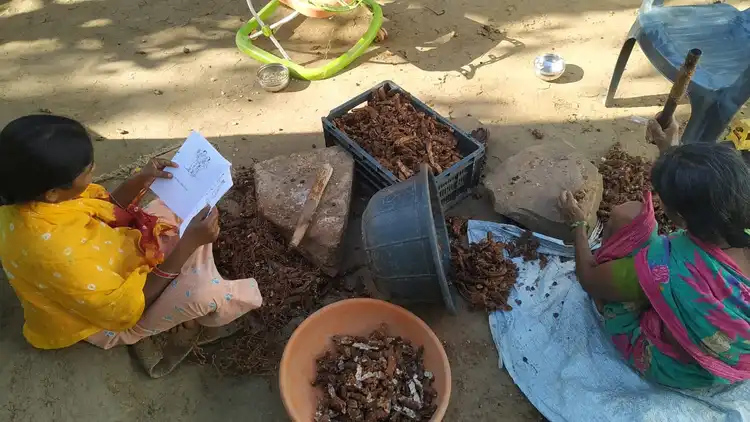
Mirgan people from the winter season to the summer season, all the villagers remain busy with tamarind processing. A trader (seth) comes to the village and organizes the tamarind work. Whole village women will take tamarind from the trader after weighing it. The trader will record the total amount of tamarind taken by the women in a notebook.
They will remove the shells of tamarind and dry it in the sunlight. After that, they place it on a stone and break it. The seeds are separated from the tamarind. Some people make tamarind pulp, while others make tamarind chapati (pressed sheets). This work is done together by all family members.
However after completing the work, the processed tamarind is taken back to the trader. The trader pays the women weekly. After receiving the payment, the women go to the market and buy vegetables. In this way, the village women earn money happily by processing tamarind throughout the winter and summer seasons.
Tendu Leave
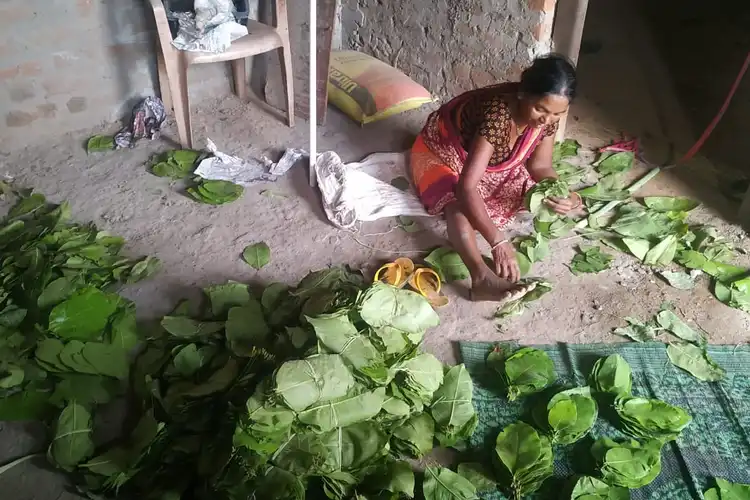
During the summer season, all the men and women of the village go to prune the tendu plants. Pruning the tendu plants helps good-quality leaves to grow. After that in the month of May, the work of plucking tendu leaves begins.
Specially the women of the village go early in the morning to the forest or open fields and pluck good tendu leaves. They bring them home and tie them into bundles of fifty leaves each. This work is also done together by the entire family. Later, the bundles are taken to the purchasing centres after it dried. This work continues for two to three weeks. The government carries out the purchase of tendu leaves, and it provides good wages to the villagers for plucking them.
Food
Food of Mirgan People
The Mirgan people grow vegetables from time to time through farming in order to meet their food needs. Along with this, they also collect leafy vegetables and edible items from the forests. These include datun leaves, mushrooms, futu, edible ants, kermeta, bamboo shoots, charota bhaji, chenj bhaji, siliyari bhaji, pataru bhaji, as well as crab, fish, and snails. People usually gather these items while searching for firewood in the forest or while going towards their fields.
Mushrooms and Futu
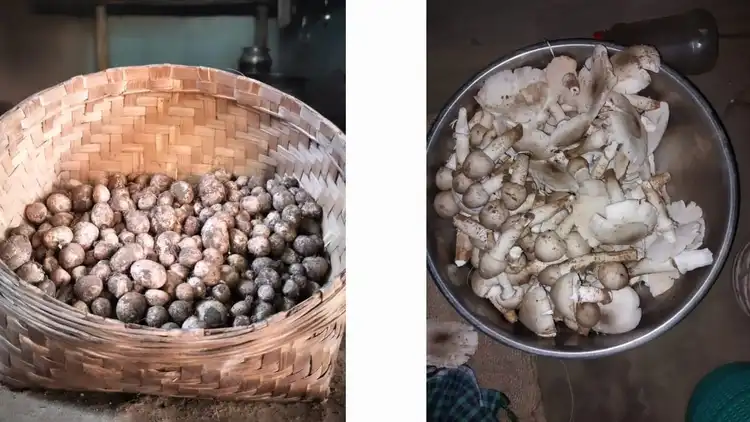
During the rainy season, after rainfall when the sun comes out, the leaves in the forest begin to decay. As a result of this decay, mushrooms and futu start to grow. So, women in the village will wake up early in the morning and go to the forest to collect mushrooms and futu.
There are many different types of mushrooms. They are named according to their color, taste, or shape. Some of the local mushrooms are known as Pan Chhati, Taku Chhati, Harduliya Chhati, Manjur Dunda Chhati, Bhat Chhati, Dengur Chhati, Manuk Chhati, and Khad Chhati. Each of these mushrooms has a different taste. Some people bring mushrooms home and dry them. The dried mushrooms are called Chhati Sola. Chhati Sola is cooked and eaten as a local dish known as Aamat.
Futu is found underground. It looks round, like small marbles. When futu grows, small cracks appear on the surface of the soil. People dig into these cracks using knives or pointed sticks and take out the futu. There are also different types of futu, each with a different taste. The local types of futu are called Jaat Boda and Lakdi Boda. People cook futu as Aamat or as a vegetable and eat it.
Ant Chutney
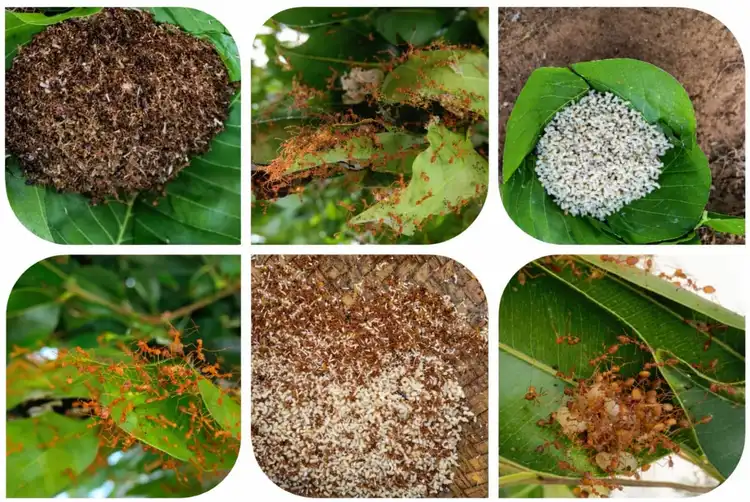
This is the famous chutney of Mirgan People. Man and women and even children joins to go into the forest to collect edible ants. These ants live in nests built on salai (sal) or teak trees. The Man and women walk through the forest searching for trees that have ant nests. After they found, they will use a long stick, they pull down the ant nests and place them in baskets. Collecting ants is very difficult because while doing this, the ants crawl all over the body and bite, causing the entire body to swell. But people have their own technic to do it.
After they done it, they will bring the ants at home and ground into chutney. And their eggs they will cook and eat.
Fish and Crabs
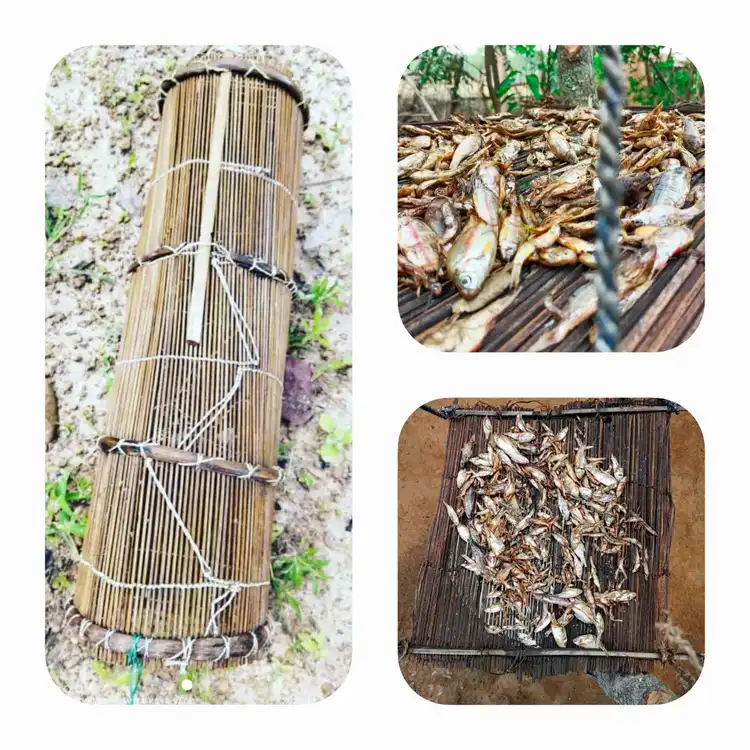
During the rainy season, after water fills the fields, many crabs, fish, and snails are found. To catch the fish, the men of the village make traditional tools called Bisar and a circular bamboo trap known as Dandar. Some people also catch fish using nets or fishing rods. The fish are brought home and cooked for eating, or they are dried and stored in a traditional container called Chhachna. The dried fish is called Suksi, and large fish that are cut into pieces and dried are known as Kutka Suksi.
There are many different kinds of local fish, such as Kotri, Bami, Khoksi, Tengna, Turu, Mangur, Keu Machhli, and Chingri (prawn). Crabs are also found in the fields. To catch crabs, men insert small grass stalks into the crab holes and pull them out, or some women catch crabs while transplanting paddy. The crabs are brought home, cooked, and eaten. There are different local types of crabs, such as Kakda, Mandeya Kakda, and Chaar Kakda. Some people also use crabs for medicinal purposes.